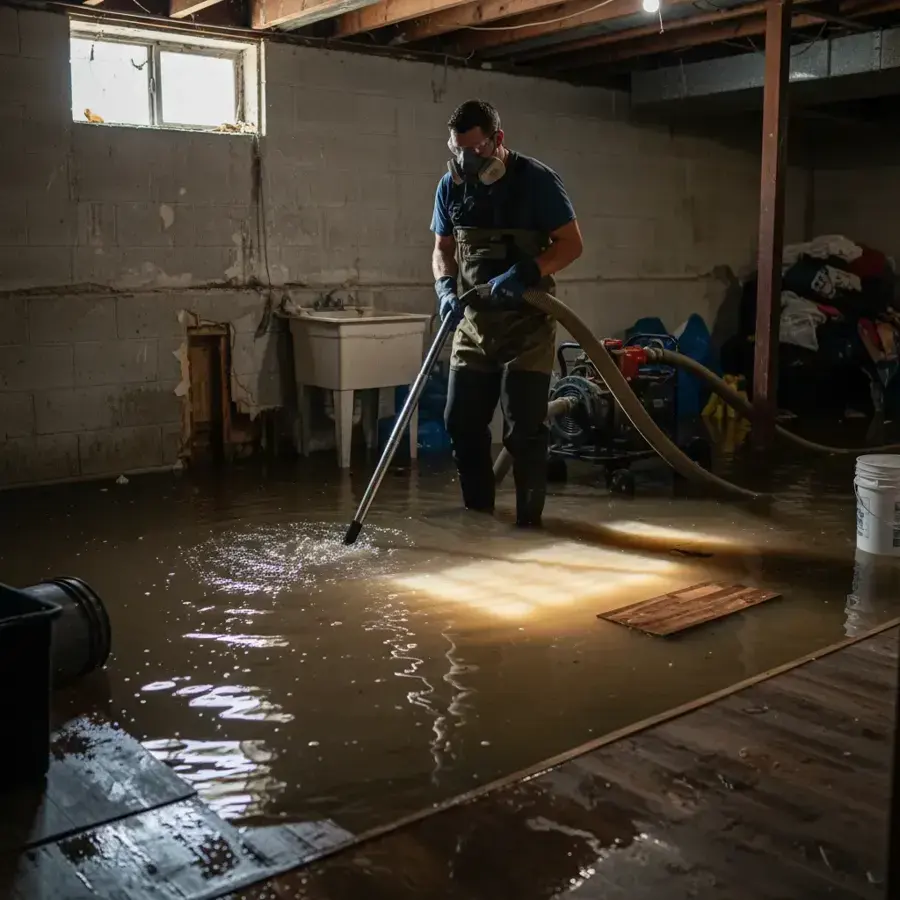
On September 29, 2023, record rain flooded homes on Linwood Avenue in Farmingdale. One resident said her basement filled up to the first floor, and that kind of flooding comes from the street and the storm drains, not from a leaking pipe.
Key takeaways
- Storm drain flooding fills a basement from the outside, so the water often carries dirt and contamination.
- In October 2023, the mayor said Farmingdale has a storm drain problem and that the drains were not designed for 7 to 9 inches of rain.
- A Linwood Avenue resident lost heat and hot water after the flood, which shows how fast a basement boiler or water heater can be hit.
- Extraction, removal of wet materials and drying with moisture readings follow in that order.
- Photos taken before anything is moved make the insurance conversation easier.
What happened on Linwood Avenue
Record rain on September 29, 2023 flooded homes on Linwood Avenue. One resident said her basement filled up to the first floor.
After the flood, the same resident said that mold treatment in her basement had to be done immediately and that she had lost heat and hot water. In August 2024, Newsday reported that residents said the floodwaters destroyed appliances and belongings.
Why a storm drain problem floods basements
In October 2023, Mayor Ralph Ekstrand said Farmingdale has a storm drain problem rather than a sewer problem. He said the drains were not designed for 7 to 9 inches of rain.
The village sits on a flat outwash plain, so water has few places to run.
It is split between the Massapequa Creek and Seaford Creek drainage areas, and the village said it was working on a redesign of its drainage system with the town, county, state and a civil engineering firm.
- Linwood Avenue is a known flood spot.
- The intersection of Merritts Road and Hempstead Turnpike flooded after thunderstorms on July 23, 2019.
- Route 110 near Conklin Street is also a known flood spot, and flash flooding closed Route 110 on August 13, 2014.
What this water is like
Water that comes in through a basement window, door or floor drain from a flooded street is not clean. It gathers soil, oil and bacteria on the way.
That is why restoration pros handle it more carefully than a leak from a supply pipe. Porous materials that soaked it up are usually removed rather than dried in place.
A basement that stayed under water for even a day will smell of mud and wet wood afterward, which is a sign that moisture is still in the structure.
- Carpet and pad are usually removed.
- Wet drywall and insulation on the lower part of walls are cut out.
- Hard surfaces and framing are cleaned and dried.
- Boilers, water heaters and panels in a basement need to be checked for damage.
The cleanup in order
First: safety and shutoffs
Do not enter a flooded basement while the power is on or the water is still rising. Standing water can reach outlets, a panel or a heating unit.
Then: extraction and removal
The crew pulls the standing water out with truck mounted or portable extractors. The Farmingdale basement flooding cleanup page and the water extraction page explain what that step involves.
- Water is pumped and extracted down to the slab.
- Wet floor coverings and the lower section of drywall are removed.
- Furniture and boxes that soaked up water are sorted into save and discard piles.
Finally: structural drying
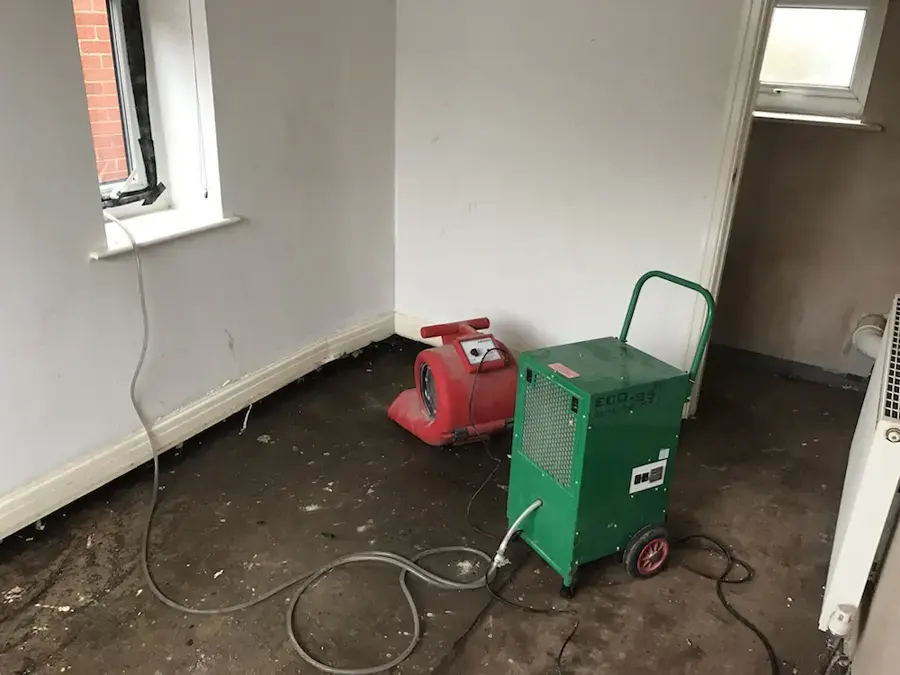
Air movers and dehumidifiers run until moisture readings show the slab and framing are dry. The structural drying page describes how readings are tracked.
Heat and hot water after a flood
Many Farmingdale homes heat with utility gas, and about 1,081 homes heat with fuel oil. Either way, a boiler or water heater sitting on a flooded basement floor can be damaged.
The resident on Linwood Avenue who lost heat and hot water after September 2023 is an example. A heating contractor needs to inspect any unit that sat in water before it is turned back on.
Other Farmingdale flood spots and why they matter
Linwood Avenue is not the only place where water gathers. Several corridors in the village flood when the drains fall behind.
On July 23, 2019, the intersection of Merritts Road and Hempstead Turnpike flooded after severe thunderstorms, and cars were stuck under the Long Island Rail Road trestle.
On August 13, 2014, flash flooding closed Route 110 between Route 109 and Ruland Road, and both ways from Conklin Street to Sherwood Avenue.
- Downtown Main Street and Conklin Street, where businesses sit close to the street.
- Lenox Hills, a section of the village built in the 1920s beside Bethpage State Park, with rolling hills and later subdivisions.
- Homes in the flatter parts of the village, where water has little slope to run off.
What a homeowner can check before the next storm
A few habits reduce the damage when a heavy rain arrives. None of them stops the water, but they buy time and protect what matters.
Keep a sump pump tested and keep stored items off the basement floor. Know where the main water valve and the electric panel are, and keep the boiler and water heater off the floor if possible.
- Test the sump pump with a bucket of water before the rainy season.
- Keep window wells and floor drains clear of leaves and debris.
- Store important papers and keepsakes on upper floors or high shelves.
- Take dated photos of the finished basement in normal condition.
Insurance notes
Coverage for water coming in from outside is often separate from coverage for a burst pipe. The policy wording decides, and an adjuster will want photos taken before cleanup.
A rough budget is available from the water damage cost calculator, which gives ranges by size of the affected area.
Keep a list of what was damaged, with rough values and photos. Appliances, stored belongings and basement furniture all belong on it, since residents on Linwood Avenue said the floodwaters destroyed appliances and belongings.