Structural Drying in Huntington Station, NY
Drying the surface is easy. Drying the framing, subfloor and walls is the job. The drying team sets equipment to the load and pulls it only when the readings say dry.
(888) 527-9860Need it dried right? Call now- IICRC S500 drying
- Daily moisture readings
- Truck-mounted extraction
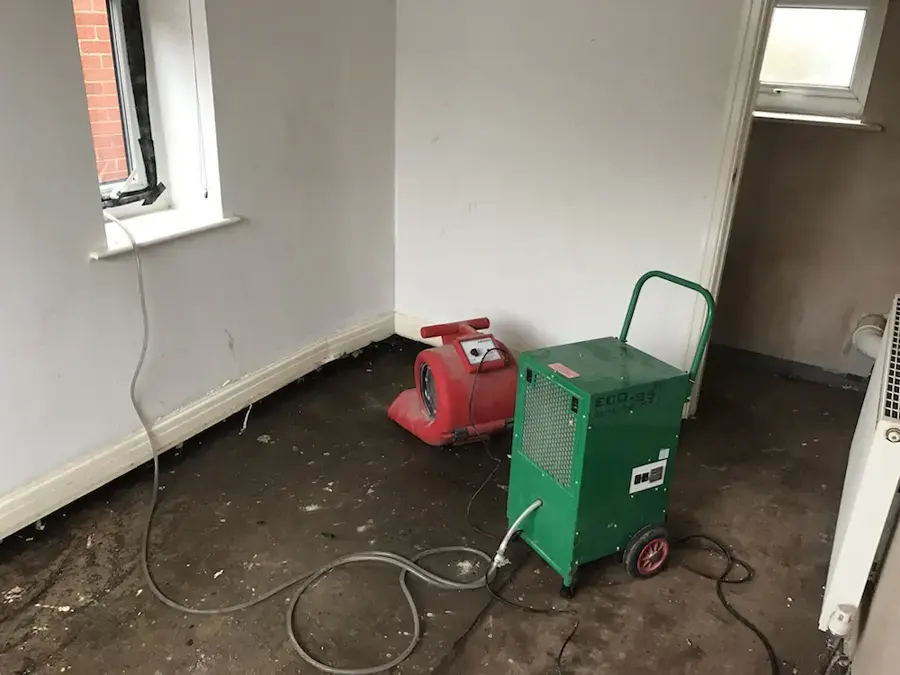
First steps for structural drying in Huntington Station
- 1Stop the water. Shut off the source so drying is not fighting new water.
- 2Open the house up. Run the heat in winter and keep interior doors open.
- 3Leave the equipment running. Do not turn off air movers or dehumidifiers to save power.
- 4Keep the readings going. The equipment comes out on readings, not on a date.
How structural drying is handled in Huntington Station
A finished dry-out and a cosmetic one look alike on day one. The difference is the order of the work and the readings behind it.
Rapid local response
The restoration team runs 24/7 dispatch, because drying that starts early saves more material.
IICRC S500 drying standard
IICRC S500 is the industry drying standard. Class 1 through 4 sets how much equipment a room needs.
Claim-ready documentation
Daily psychrometric logs and moisture readings show the adjuster the structure reached the drying goal.
Older-home know-how
Plaster walls, hardwood and finished lower levels are common here and dry differently from drywall.
What does structural drying cost in Huntington Station, NY?
In Huntington Station, NY, structural drying typically runs $1,200 to $6,500 or more, depending on the number of rooms, the class of the loss, the materials involved and how many days the readings call for.
The drivers are the water category, the square footage that got wet, the material class and how fast drying started. Try the water damage cost calculator for a planning range, then call for a firm number.
One or two rooms
$1,200 to $2,500- Air movers and one LGR unit
- Three to four days
- Daily readings
Lower level or a floor
$2,500 to $4,500- Several air movers
- Multiple LGR units
- Cavity drying
Hardwood or plaster
$4,500 to $6,500+- Floor drying mats
- Desiccant dehumidifiers
- Extended monitoring
How structural drying moves from wet to dry
- 1
Moisture map
The tech who does the walkthrough records every wet material and a dry reference.
- 2
Set the equipment
The drying team sizes air movers and dehumidifiers to the class of loss.
- 3
Read daily
Moisture and psychrometric readings are logged every day and equipment is adjusted.
- 4
Verify dry
Equipment comes out when materials read within 2 to 4 points of the dry reference.
Structural drying is the part of water damage restoration that decides whether a house stays healthy. Surfaces can look dry in a day, while the framing, subfloor and the inside of a wall stay wet for weeks. The drying team measures those materials, sets equipment to the load of each room and keeps going until the numbers reach the drying goal.
The equipment and what it does
- Air movers push air across wet surfaces to speed evaporation
- LGR dehumidifiers pull that moisture out of the air
- Desiccant dehumidifiers handle dense Class 4 materials like hardwood and plaster
- Floor drying mats pull water out of hardwood boards
- Thermal imaging and pinless meters find water behind walls
Class of loss and the drying plan
Class 1 through 4 describes how much water a room absorbed and how hard it is to dry, and it sets how much equipment goes in. A Class 1 loss is a small area with little absorption; Class 4 means dense materials like plaster, hardwood and concrete that hold water deep. Huntington Station's older homes often mix plaster, hardwood and finished basements, so the plan is built room by room. The drying-time estimator gives a rough range.
Wet framing, plaster or hardwood? Get the structure dried to the readings.
Call (888) 527-9860 about structural drying in Huntington StationWhy readings matter for the claim
Daily readings are the proof that the structure is dry before walls are closed and floors go back down. They also show an adjuster why the equipment stayed as long as it did. The EPA mold cleanup page explains the 24 to 48 hour window, and EPA indoor air quality covers humidity in the home.
Covering all of Huntington Station, NY 11746
The restoration team covers Huntington Station and South Huntington in ZIP 11746, from the New York Avenue corridor to West Hills, with Huntington, Greenlawn, Dix Hills and Melville close by.
See every area servedStructural Drying and Dehumidification questions in Huntington Station, NY
Why does the equipment need to run so long?
Surfaces dry fast, but framing, subfloor and plaster give up water slowly. The equipment stays until readings show those materials are dry.
Can I turn the equipment off at night?
Please do not. Drying runs around the clock, and turning equipment off resets progress and can let materials reabsorb moisture.
What is a dry reference?
A reading from the same material in an unaffected part of the house. The drying goal is within 2 to 4 points of it.
Can hardwood floors be dried?
Often, with floor drying mats and dehumidification, if drying starts early. Boards that have buckled may need replacing.
What about plaster walls?
Plaster holds water longer than drywall and usually needs more time and sometimes desiccant dehumidification.
Is structural drying covered by insurance?
Drying after a covered water loss is usually part of the claim. Coverage depends on your policy, so it is worth checking with your own insurer.
Need the structure dried, not just the surface?
Wet framing and subfloor stay wet long after the carpet feels dry. The Huntington Station restoration crew dispatches 24/7.