Structural Drying in Farmingdale, NY
A floor can feel dry while the studs and subfloor underneath stay wet. The drying team sets equipment to each room's load and pulls it only when the meters agree.
(888) 527-9860Need it dried properly? Call now- IICRC S500 drying
- Daily moisture readings
- Truck-mounted extraction
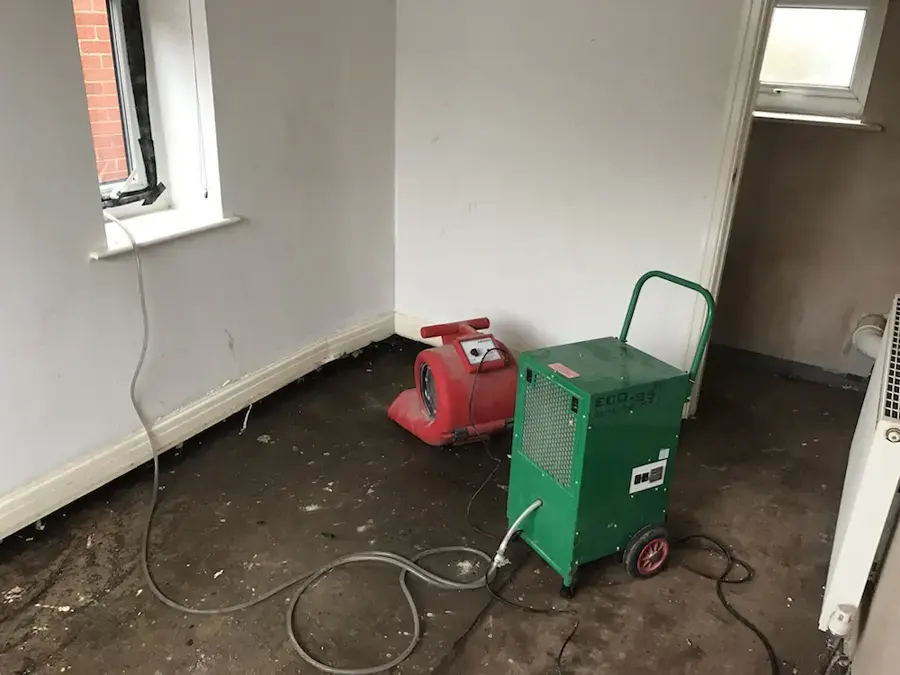
First steps for structural drying in Farmingdale
- 1Stop new water. Close the source valve so the equipment is not fighting fresh moisture.
- 2Keep air moving. Open interior doors so air can circulate, and keep the house heated in winter.
- 3Do not switch gear off. Resist unplugging fans or dehumidifiers to save on the power bill.
- 4Let the meters decide. Equipment leaves on readings, not on a date.
How structural drying is handled in Farmingdale
A finished dry-out and a cosmetic one look alike on day one. The difference is the order of the work and the readings behind it.
Rapid local response
Dispatch never closes, so drying equipment can go in before the structure holds days of moisture.
IICRC S500 drying standard
S500 sets the class of loss and the equipment count, and the finish is a set of readings.
Claim-ready documentation
Daily psychrometric and moisture logs explain to an insurer why equipment stayed on site as many days as it did.
Old-building know-how
About 783 homes here date to 1939 or earlier, and older framing, plaster and flooring dry on their own schedule.
What does structural drying cost in Farmingdale, NY?
Drying work in Farmingdale, NY usually costs $1,200 to $6,500 or more. Room count, class of loss, building materials and the number of days the meters demand decide the total.
The drivers are the water category, the square footage that got wet, the material class and how fast drying started. Try the water damage cost calculator for a planning range, then call for a firm number.
One or two rooms
$1,200 to $2,500- Fans and one dehumidifier
- About three or four days
- Daily meter checks
Whole lower level
$2,500 to $4,500- Several fans running
- Multiple LGR dehumidifiers
- Wall cavities included
Dense materials
$4,500 to $6,500+- Mats on hardwood boards
- Desiccant dehumidifiers
- Longer monitoring period
How structural drying moves from wet to dry
- 1
Map and baseline
The walkthrough tech records each wet material and a dry reference from an unaffected room.
- 2
Place the equipment
The drying team matches fans and dehumidifiers to the class of loss in each room.
- 3
Read every day
Moisture and humidity readings are logged daily and the equipment is moved as needed.
- 4
Confirm dry
Gear leaves after wet materials land close to the dry reference.
Surfaces can look dry within a day while framing, subfloor and wall cavities stay wet for weeks. Farmingdale's median home was built around 1963, and about 783 homes date to 1939 or earlier, so a lot of older lumber and old flooring has to be dried correctly. A Linwood Avenue resident said that after the September 2023 flood, mold treatment in her basement had to be done immediately, which shows what happens when moisture lingers.
The equipment and what each piece does
- Fans move air over wet surfaces to speed evaporation
- Low-grain refrigerant dehumidifiers collect that moisture from the air
- Desiccant units handle dense materials such as hardwood and plaster
- Floor mats draw water up out of hardwood boards
- Thermal cameras and pinless meters locate water behind walls
Class of loss sets the plan
Four classes of loss rate a room by how much water the materials took in and how stubbornly they hold it. Class 1 is a small, low-absorption area, while Class 4 means dense materials such as plaster, hardwood and concrete holding water deep. Farmingdale's older houses and finished lower levels mix those materials, so each room gets its own plan. The drying time estimator offers a rough range.
Wet studs, plaster or hardwood? Get the structure dried to the readings.
Call (888) 527-9860 about structural drying in FarmingdaleWhy daily readings protect the claim
Daily readings prove the structure is dry before walls close and new flooring goes down, and they show an adjuster why the equipment ran as long as it did. Drying within the first two days also limits mold. After a flood, water extraction in Farmingdale comes first, and this stage follows.
Covering every corner of Farmingdale, NY
Crews work across the whole village of Farmingdale in ZIP 11735, from Downtown Farmingdale and the Lenox Hills section beside Bethpage State Park to the old Hardscrabble district, and out through East Farmingdale, South Farmingdale and Nassau County.
See every area servedStructural Drying and Dehumidification questions in Farmingdale, NY
Why is equipment left running for days?
Water hides inside framing, subfloor and concrete long after the surface feels dry. The gear stays until moisture readings, not appearances, say the job is done.
Is it okay to unplug it overnight?
No. Drying depends on continuous airflow and dehumidification, and a night off lets moisture settle back into materials and slows the whole job.
What counts as dry?
A reading from a similar material in an untouched part of the house sets the target. Wet materials have to land within a few points of it.
Will hardwood floors survive?
Often, with mats, heat and desiccant dehumidifiers, when work starts early. Boards that cup badly or split may still need replacing once they are dry.
How do plaster walls dry?
Slowly. Plaster and lath hold water deep, so they get extra equipment and extra readings, and any section that crumbles is removed.
Does insurance pay for drying?
Drying after a sudden covered loss is usually part of the claim, and daily logs support it. Policies differ, so confirm with your insurer.
Wet studs and subfloor? Get them dried, not just surfaces.
Framing stays damp long after carpet feels dry. The Farmingdale restoration crew works around the clock, every day.