Basement Flooding Cleanup in Lindenhurst, NY
Low homes beside the canals and the Great South Bay can take on tide and groundwater in a nor'easter. The extraction crew pumps out the lower level and the drying team dries it down to the slab.
(888) 527-9860Lower level flooded? Call 24/7 dispatch- IICRC S500 drying
- Daily moisture readings
- Truck-mounted extraction
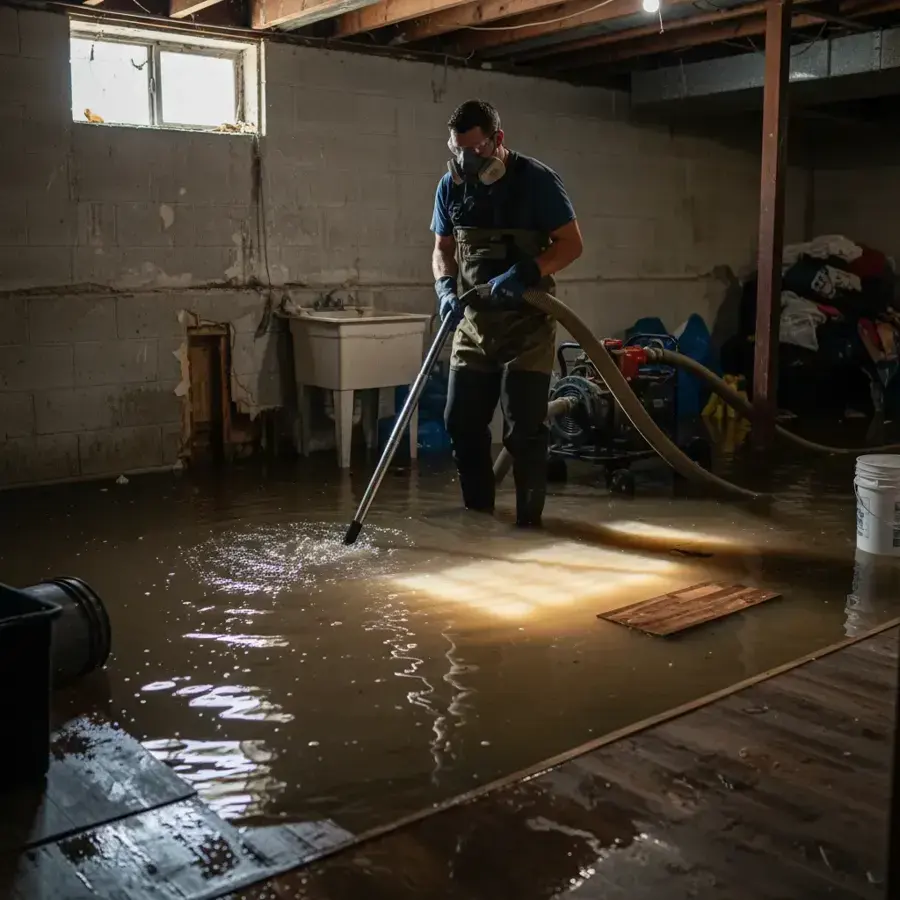
First steps for basement flooding cleanup in Lindenhurst
- 1Keep out of deep water. Water near outlets, cords or the heating system can be live. Stay upstairs until power is off.
- 2Learn where it came from. Tide, a pipe, a drain or the ground each calls for a different fix.
- 3Photograph the damage. Capture the waterline, belongings and equipment before anything moves.
- 4Call for pumping. Standing water gets heavier on the structure with every hour.
How basement flooding cleanup is handled in Lindenhurst
A finished dry-out and a cosmetic one look alike on day one. The difference is the order of the work and the readings behind it.
Rapid local response
The Lindenhurst crew can be reached through the night, so pumping can start before water soaks into the slab and lower walls.
IICRC S500 drying standard
S500 is the drying yardstick. Equipment stays until meters confirm the slab and walls have reached the target.
Claim-ready documentation
A moisture map, daily readings and dated photos give an insurer the full picture of the loss.
Canal-side know-how
Low-lying houses near the water often take on tide and groundwater, so cleaning comes before drying.
What does basement flooding cleanup cost in Lindenhurst, NY?
Basement flooding cleanup in Lindenhurst, NY usually lands between $2,000 and $10,000 or more. The figure follows the water depth, whether the space is finished, the category of the water and how long it sat.
The drivers are the water category, the square footage that got wet, the material class and how fast drying started. Try the water damage cost calculator for a planning range, then call for a firm number.
Unfinished lower level
$2,000 to $4,000- Pumping and extraction
- Slab and wall bases dried
- Antimicrobial where needed
Finished space
$4,000 to $7,500- Carpet, pad and drywall out
- LGR units and air movers
- Wall bays dried and logged
Deep or tidal water
$7,500 to $10,000+- Category 3 containment
- Porous materials discarded
- HEPA air scrubbing
How basement flooding cleanup moves from wet to dry
- 1
Find the source
The tech who does the walkthrough works out whether tide, a pipe, a drain or groundwater is responsible.
- 2
Pump and extract
Pumps lower the water, then truck-mounted units take the rest off the slab and carpet.
- 3
Remove wet finishes
Carpet, pad and low drywall that cannot dry are cut away.
- 4
Dry the lower level
Air movers and dehumidifiers run until slab and wall readings reach the goal.
Lindenhurst is lined with canals and sits on the Great South Bay near Jones Inlet, and flooding is widespread whenever storms push water up. Low-lying houses near the water can take on tide and groundwater in a nor'easter, and a Beach Street resident said the street is basically a canal when it rains. Lower levels and crawl spaces fill first.
How lower levels flood here
- Tide pushed through canals and storm drains during a nor'easter
- Groundwater rising under and around the foundation
- A failed sump pump or a pump that could not keep up
- A burst pipe or a failed water heater
- A drain that backs up when the system is full
How a flooded lower level gets dried
Pumps lower the standing water, and truck-mounted extraction takes the rest from the slab and carpet. Wet carpet, pad and the bottom of the drywall are removed. The drying team then runs air movers and LGR dehumidifiers and logs readings until the slab and walls reach the goal. For the pump itself, see sump pump failure cleanup.
Water in a Lindenhurst lower level? Start the pump-out before it soaks the walls.
Call (888) 527-9860 about basement flooding cleanup in LindenhurstFlood coverage and seepage
Tide or storm water entering from outside is usually a flood coverage question, while a failed pipe or tank is handled differently. Slow seepage is often excluded. Policies differ, so ask your own insurer, and keep dated photos and the moisture log for the adjuster. The village overview covers more: water damage restoration in Lindenhurst.
Covering every corner of Lindenhurst, NY
The restoration team works across Lindenhurst village in ZIP 11757, which also takes in North Lindenhurst, Venetian Shores and American Venice, and reaches neighbors such as Copiague, West Babylon and North Amityville, from the village center to the Great South Bay shore.
See every area servedBasement Flooding Cleanup questions in Lindenhurst, NY
Is it safe to walk into floodwater?
Not until the power is off. Water near outlets and the heating system can be live, and floodwater from outside carries contamination.
Can wet carpet be saved?
Clean-water carpet sometimes can with prompt drying. Carpet soaked by tide, storm or sewage water is removed, along with the pad underneath it.
Why does it smell damp afterward?
A musty smell means moisture remains in the slab, the wall bases or the pad. Proper drying clears the source of the odor.
How long does drying take after a flood?
Often three to five days for a shallow flood of clean water. Deep water, tide water, finished walls and a slab that soaked for days all add time.
Do the walls need to be opened?
Only where readings show water behind the surface. Wet insulation and drywall that swells, sags or crumbles usually comes out, and the rest can often stay.
Does insurance cover a flooded lower level?
Sudden leaks and pipe failures are commonly covered after the deductible. Water from outside needs flood coverage. Policies differ, so ask your own insurer.
Lower level flooded? Get it pumped out and dried.
Floodwater works into the slab and walls with each hour. The Lindenhurst restoration crew dispatches around the clock.