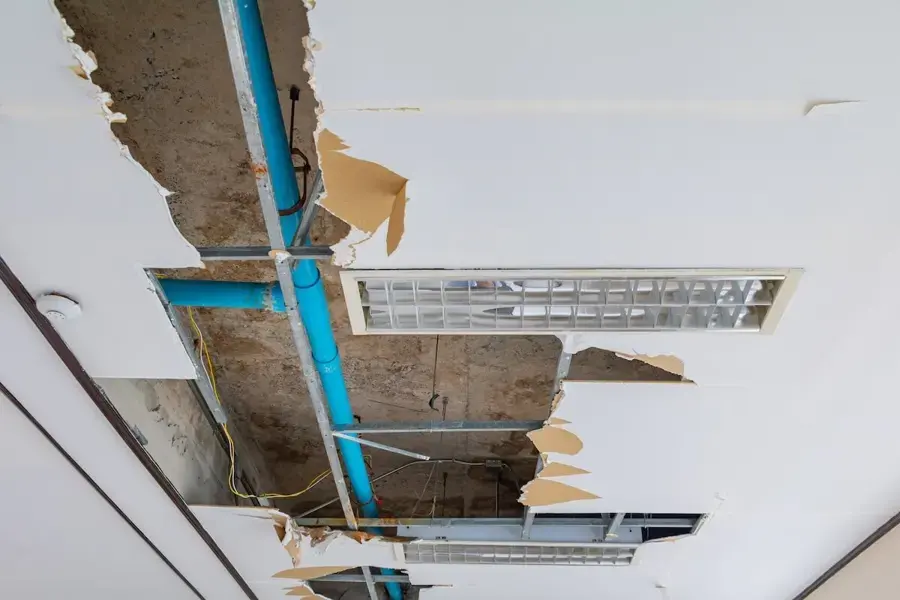
In 2023 the Westbury Water District dealt with pinhole leaks and burst pipe holes on Ellison Avenue and at least 16 water leaks along Elizabeth and Pearl streets. The district's superintendent warned that if street pipes were bursting, pipes in people's houses could burst too, at the homeowner's cost.
Key takeaways
- A pinhole leak is a tiny hole that sprays or weeps water for days before anyone sees a stain.
- A burst pipe can release a lot of water in minutes, so the main shutoff valve is the first thing to find.
- Most Westbury homes are older, with about 2,033 built in the 1950s and a median build year around 1955.
- Water inside walls and under floors does damage even when the surface looks dry.
- Prompt extraction, then drying with moisture readings, limits the repair.
What happened on Ellison Avenue and nearby streets
In 2023 the Westbury Water District reported pinhole leaks and burst pipe holes on Ellison Avenue. At least 16 water leaks were found along Elizabeth and Pearl streets.
Officials cited electrolysis from stray electrical current as a cause of the pinholes. PSEG said it found and repaired a broken wire near Ellison Avenue.
The superintendent said that because street water pipes were bursting, pipes in houses could burst too, at the homeowner's cost.
Pinhole leaks versus bursts
A pinhole leak is a tiny puncture in a pipe wall. It can spray a fine stream into a wall cavity or drip onto a floor for a long time.
A burst is a sudden rupture. It floods a space in minutes.
- A pinhole often shows up as a stain, a musty smell, bubbling paint or a rise in the water bill.
- A burst shows up as running water, a drop in water pressure or a ceiling that sags.
- Both can happen behind a wall, under a slab or above a ceiling where nobody can see them.
Westbury's housing makes this a real concern
The village has about 5,352 housing units, with about 3,791 of them single family detached homes. About 820 were built in 1939 or earlier, and about 2,033 in the 1950s.
Older homes mean older piping, fittings and shutoff valves. Plumbing differs from house to house, but age alone raises the odds of a failure.
About 1,130 occupied homes are rented, and buildings with 20 to 49 units or 50 or more units mean a leak in one unit can reach others.
The downtown redevelopment around Post Avenue and the Maple Union Triangle adds new plumbing next to old, and the village requires stormwater from redevelopment to be contained and recharged on site.
What the Westbury Water District says about its system
The district was founded in 1911 and serves about 6,000 residential and commercial properties. It pumps water from 10 deep wells in the Magothy aquifer through its system of water mains.
It also has 785 fire hydrants and 2.5 million gallons of storage in an elevated tank and an underground tank.
A new treatment plant on Drexel Avenue removes contaminants including 1,4-dioxane, PFOS and PFOA, and the district unveiled a new headquarters in July 2026.
- The district handles the street mains up to the property.
- The homeowner is responsible for the pipes inside the house, as the superintendent noted.
- Leaks outside the house are reported to the district, and leaks inside are handled by a plumber.
What to do when a pipe lets go
Stop the water
Find the main shutoff valve and close it. If the leak is on a fixture, the valve under the sink or behind the toilet may stop it.
If water is near outlets or a panel, stay out and shut off power only if it is safe.
Limit the damage
Open cabinet doors and lift rugs. Move furniture and electronics off wet floors.
- Photograph the source, the water and the damaged items.
- Mop or soak up what you can reach, and keep wet items out of the area.
- Open doors and windows if the weather is mild, to move air.
How the cleanup works
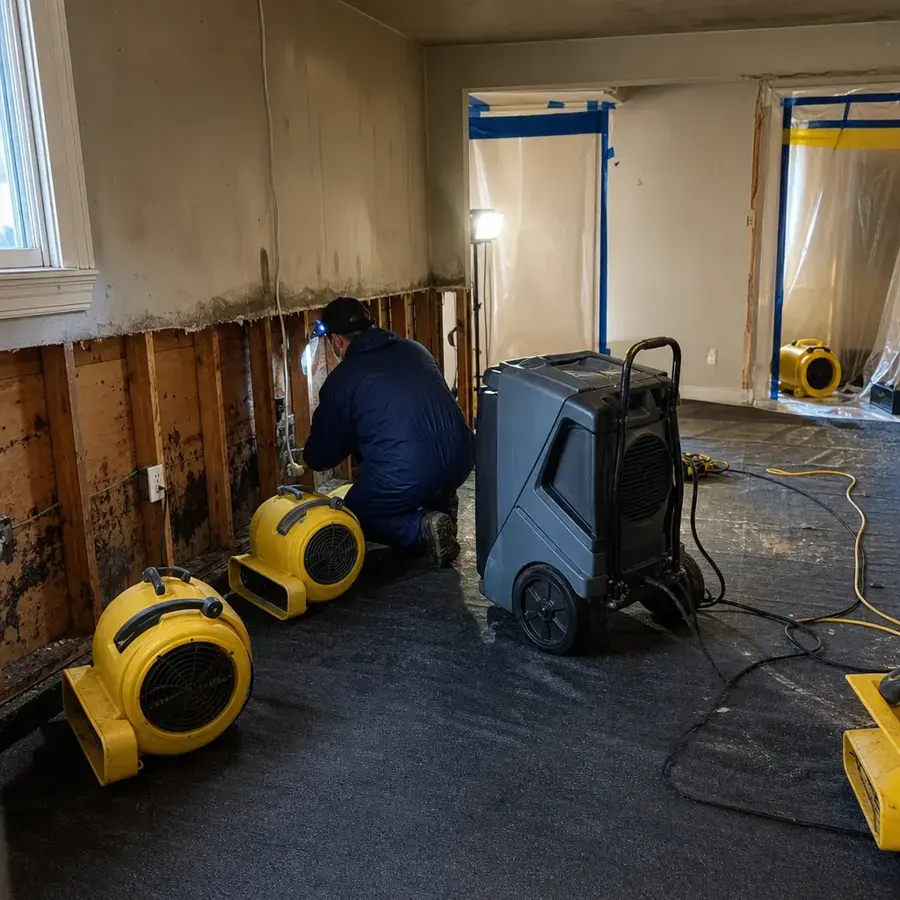
The crew finds hidden moisture with meters and a thermal camera, then extracts standing water. The Westbury burst pipe cleanup page and the Westbury water extraction page describe each step.
Wet drywall, insulation and flooring come out where they cannot be dried. Air movers and dehumidifiers dry the rest.
- A pinhole inside a wall often means cutting a small opening to reach the wet cavity.
- Hardwood and laminate floors can cup if moisture is left under them.
- Mold can begin within 24 to 48 hours, so drying starts as soon as the water is out.
Signs a house pipe may be failing
Pipes rarely fail without hints. A homeowner who knows the signs can act before a small leak becomes a flood.
A change in water pressure, discolored water from a tap or the sound of running water when everything is off all deserve a closer look.
- A water meter that keeps moving when every fixture is off.
- Green or blue stains near a pipe or fitting.
- Warm spots on a floor, which can point to a hot water pipe leaking below.
- Walls or ceilings that feel cool and damp to the touch.
Weekend or overnight leaks
Burst pipes often show up when nobody is watching. A leak that runs overnight or while a family is away can put an inch of water across a floor before anyone notices.
Closing the main shutoff before a long trip is a simple precaution. It takes seconds, and it limits what a burst can do.
Pipe repairs, permits and paperwork
The Village of Westbury Building Department requires permits for plumbing. A plumber handles the repair, and the restoration team handles the water.
The Westbury town page lists the other services available locally, and the burst pipe cleanup page explains the process in general.
Insurance usually covers a sudden burst but may treat long running seepage differently, so the policy wording matters.
A quick call to the water district is worth making if several neighbors see low pressure at once, since that can point to a problem in the street rather than inside one house.