Main Street in Northport runs downhill to the harbor, and a hard downpour sends stormwater straight down it. Shops and restaurants at the bottom of that slope are the first to see water at the door.
Key takeaways
- Stormwater from higher streets rushes down to the foot of Main Street and drains toward Northport Harbor.
- Lower Main Street flooded in the usual spots on September 28, 2012 and again in heavy thunderstorm rain on August 20, 2026.
- Day one for a business owner is safety, shutting off power to wet areas, moving stock and documenting everything.
- Older village buildings with old floors and walls need careful drying, not just a mop and a fan.
- Extraction comes first, then drying with moisture readings that confirm the space is ready to reopen.
Why lower Main Street floods
Most of Northport sits on the low, steep hills of the Harbor Hill Moraine. Main Street runs downhill to Northport Harbor, and stormwater from higher streets rushes down to the foot of Main Street.
The water from Main Street drains directly into the harbor. When a downpour outruns the drains, it pools in the lower blocks.
- Lower Main Street, the corner of Scudder Avenue and Woodbine Avenue and Woodbine Avenue are the known flood spots.
- Locals joke about a Northport River when a downpour floods lower Main Street.
- On September 28, 2012 a torrential downpour closed lower Main Street and Woodbine Avenue stayed closed.
- On August 20, 2026 heavy thunderstorm rain flooded village streets, and residents said it floods nearly every time there is a big storm.
Sandy and the harbor side
Rain is not the only source. On October 29, 2012, Hurricane Sandy's storm surge came over the Northport Harbor bulkhead, submerged the Village Dock and flooded much of the parking lot at the head of Main Street.
Businesses near the harbor face both stormwater from uphill and surge from the water side. The two arrive in different ways and need different cleanup plans.
What older harborfront buildings mean for cleanup
Main Street downtown has shops and restaurants in older village buildings, with old trolley rails still visible in the street. Older construction often means original floors, plaster or old wood trim that react to water differently than modern materials.
A restaurant kitchen, a retail floor and a basement storage room each need a different approach, so the first job is a moisture map of every affected space.
The Northport Volunteer Fire Department and the village police, which has a marine unit, handle emergencies along the waterfront. For water in a building, the cleanup starts with a restoration crew once the area is safe.
The first day, step by step
Hour one: safety and shutoffs
Do not stand in water near outlets, a panel or refrigeration equipment. Shut off power to wet areas at the panel only if it is dry and safe to reach.
If the water came in from the street, treat it as contaminated. Storm runoff carries dirt, oil and other contaminants.
Document before moving anything
Take photos and video of the waterline, damaged stock, floors and walls. A time stamped record helps with the insurance claim.
- List damaged inventory, equipment and fixtures as the loss happens.
- Keep receipts for emergency costs such as sandbags, pumps and storage.
- Save any notes about the weather and when the water arrived.
Move stock and protect what can be saved
Lift stock onto shelves, tables or upper floors. Remove wet rugs and mats so they stop wicking moisture into the floor.
What the restoration team does
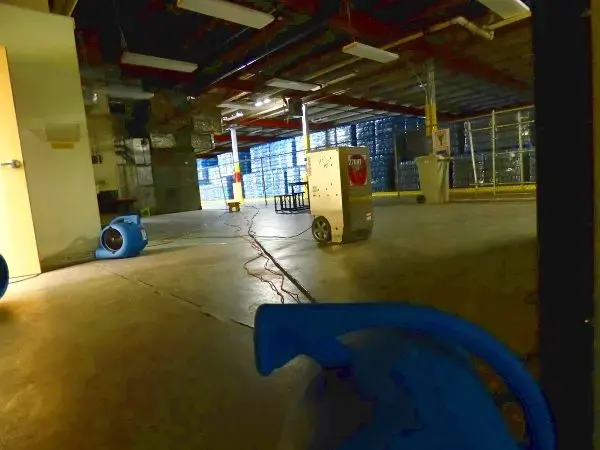
The crew starts with extraction, covered on the commercial water damage page. Water comes out of the floor and any lower level with truck mounted or portable units.
Then the drying begins. The Northport storm flood cleanup page explains how stormwater from the harbor side is handled differently from a clean water leak.
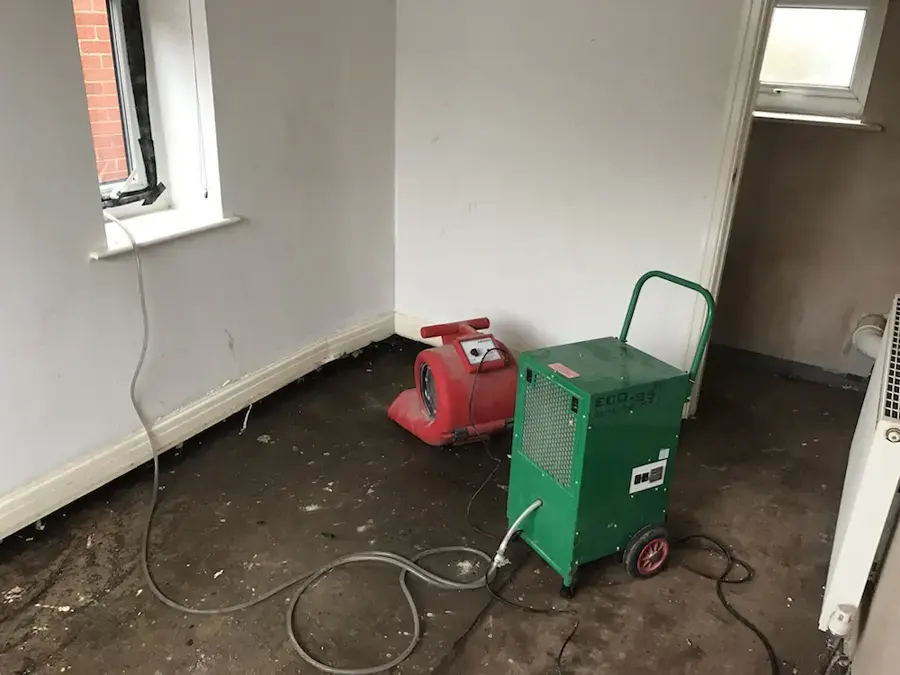
- Wet floor coverings, baseboards and the lower part of drywall are removed where they cannot be dried.
- Air movers and dehumidifiers run around the clock until readings meet the drying goal.
- Photos and moisture logs go into a report for the insurance adjuster.
- Mold can start within 24 to 48 hours, which is why speed matters for a business that wants to reopen.
Staying open while the work happens
A shop with water in only part of the floor may be able to keep selling in the dry section. A restaurant with a flooded kitchen cannot, and a health inspection usually has to follow.
Talk to the crew early about what can stay open. Containment barriers and a phased schedule sometimes let a business keep part of the space in use.
What a business owner should have ready
A short file prepared in advance saves hours when water arrives. It does not need to be complicated, and the Northport town page lists the services that apply to a local business.
- A list of the main shutoffs for power, gas and water, and where each one is.
- Photos of the shop or restaurant in normal condition, to show what the space looked like.
- An inventory of stock and equipment with rough values.
- A copy of the insurance policy and the agent's contact details.
What the village is doing about it
A federal flood mitigation project for Main Street, announced in December 2022 at $1,390,000, uses green infrastructure and traditional sewer work to stop stormwater surging down the street.
In June 2026 the state announced $654,577 for the Village of Northport to build green stormwater infrastructure, including rain gardens, in four priority areas of the waterfront.
Those projects aim at the cause. They do not remove the need for a plan when a downpour arrives before the work is done.
Business owners in the village center can use the wait to document their space, so that the next flood finds a better prepared shop.