When a nor'easter comes with high tides, water does not drain away quickly. On the South Shore of Long Island, floodwater can sit around a house for days, and that long soak is what turns a wet night into a repair project.
Key takeaways
- A nor'easter on September 27 and 28, 2026 combined heavy rain with lunar high tides and flooded Lindenhurst streets.
- One Lindenhurst homeowner said floodwater surrounded his house for three days and that he ran pumps to keep it from filling the crawl space.
- Water that stays for days soaks floor framing, insulation and ductwork, not only the surface.
- Pumping while the surrounding water is still high only works if the discharge has somewhere to go.
- Extraction and drying follow once the water around the house recedes.
What the September 2026 nor'easter did
A nor'easter on September 27 and 28, 2026 brought heavy rain together with lunar high tides. Streets in Lindenhurst flooded, and motorists were stranded and needed rescue.
A homeowner described water surrounding his house for three days. He ran pumps to stop it from filling the crawl space.
That account captures a pattern for the South Shore. The water does not come and go with the rain. It stays as long as the tide and the drains let it.
Lindenhurst Village Hall and the village fire department handle local emergencies, and the Town of Babylon takes street storm drain complaints through its Office of Citizen Services, which inspects the drain 24 hours after the next rain.
Why the South Shore holds water
Lindenhurst sits on the Great South Bay, and its waterfront neighborhoods are lined with canals. The village sits near Jones Inlet, and flooding is widespread.
Streets south of Montauk Highway take the worst of it. On October 29, 2012, Hurricane Sandy flooded over half of the village streets, and the water south of the highway took about two days to recede.
More recent storms follow the same pattern. A Beach Street resident said during the October 13, 2025 nor'easter that the street is basically a canal when it rains, and residents move their cars when flooding is expected.
What days of standing water do to a house
A short flood wets the floor. A flood that sits for days works its way into the structure.
Many Lindenhurst homes date to the 1950s, and the median home was built around 1957. Older framing and subfloors absorb water over time and release it slowly.
- Insulation under the floor soaks up water and sags, and it stays wet long after the water around the house is gone.
- Floor joists and the subfloor take on moisture from below, even if the room above looks dry.
- Heating ducts, wiring and a water heater in a low space can be damaged by the water.
- Saltwater from the bay leaves residue that can corrode metal and keep materials damp.
Pumping, and what to know before starting
Where the water goes
A pump needs a place to discharge. If the street is flooded and the yard is full, pumped water can circle back to the crawl space.
Running a pump for three days, as the homeowner did, keeps a space dry but does not fix the damage. It buys time until the tide drops.
Staying safe around floodwater
Do not walk through water that may be near electric service. Do not run a pump on a cord that lies in standing water.
- Shut off power to a flooded crawl space at the panel only if the panel is dry and reachable.
- Keep children and pets away from standing floodwater.
- Photograph the waterline on walls and the foundation before it drops.
What happens once the water recedes
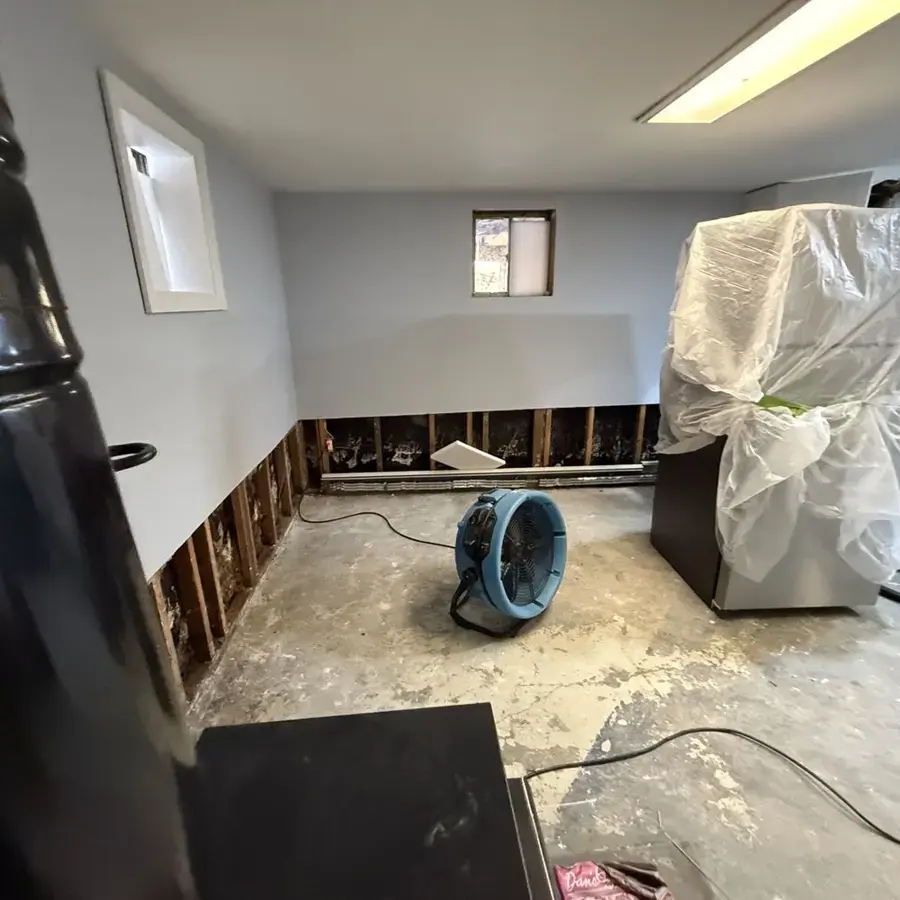
After the water outside drops, the crew extracts what is left under and around the house. The water extraction page covers that first step, and the Lindenhurst storm flood cleanup page explains how floodwater from the bay is treated.
Flood water is not clean water. It can carry contamination from streets and drains, so soaked insulation and porous materials are removed rather than dried in place.
- Extraction removes the standing water from the crawl space and any floors that took on water.
- Wet insulation and damaged subfloor sections are cut out.
- Structural drying equipment runs until readings confirm the framing is dry.
- Mold can begin within 24 to 48 hours, so the timeline is tight once the water drops.
Raising a house and other long term answers
Some Lindenhurst homeowners raised their houses after Sandy. One said Sandy came up to his door at about 6 feet.
Raising a house changes the risk but does not remove it. A crawl space, a garage and a utility room can still sit low, and the equipment in them still needs protection.
- Keep a water heater, boiler or panel above the expected waterline where possible.
- Check that pumps have a power source that works in an outage.
- Know where the shutoff for power and water is before a storm arrives.
- Move cars before flooding, as residents on Beach Street do.
Keeping a record of the event
Water that lasts for days makes the timeline important. Photos, dates and notes about how long the water stood help show what the flood did.
A dated record also helps the restoration team plan the drying, because the length of the soak decides how deep the moisture goes.
Sump pumps and other safeguards
A sump pump helps when the water is groundwater or rain, but it cannot beat a street full of tidal water. The sump pump failure page explains what a pump can and cannot do.
The Town of Babylon notes that storm sewers installed by Suffolk County in south shore areas helped drainage, except in nor'easters and hurricanes. That is the same gap homeowners see in storms like this one.
A homeowner who ran pumps for days will also want a record of how long they ran and where the water went. That detail helps the drying team judge how deep the moisture reached.