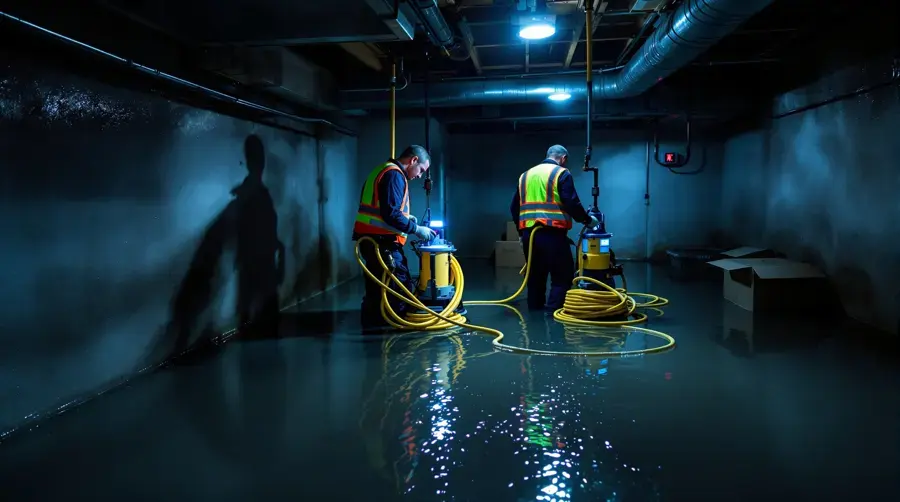
A sump pump that works perfectly on a quiet day can still leave a basement under water, because the pump needs power and a storm often takes the power first. In Huntington Station, the storms that bring the most water are the same ones that cause long outages.
Key takeaways
- A sump pit that overflows during an outage is a power problem as often as a pump problem.
- Tropical Storm Isaias in August 2020 brought long power outages to Long Island, and Superstorm Sandy hit in October 2012.
- Hilly North Shore ground sends runoff toward foundations, so the pit fills fastest when the pump cannot run.
- Moving belongings off the floor and keeping out of standing water near outlets comes before any cleanup.
- Wet lower levels need extraction and drying quickly, since damp framing and drywall keep absorbing water.
Why the pump stops when it is needed most
A standard sump pump plugs into the house electrical system. When the grid goes down, the pump goes down with it, no matter how new it is.
That is the cruel part of storm flooding. Heavy rain raises the water around the foundation at the same moment the outage removes the pump.
- A power failure stops an electric pump even if the pump is in good condition.
- A float switch that sticks, or a pump that has been running for years, can fail on its own as well.
- A discharge pipe that is frozen, clogged or knocked loose pushes water back toward the pit.
- An undersized pump can run nonstop and still lose to a heavy downpour.
Storms that brought long outages to Long Island
Tropical Storm Isaias in August 2020 downed trees and caused long power outages across Long Island. Homes with a sump pump were left without one while the grid was down.
Superstorm Sandy in October 2012 was the other storm that shaped how Long Island homeowners think about water and power.
Nor'easters arrive from late fall through early spring, and late summer is tropical storm season. That is a long stretch of the year when a lower level can take on water.
Why hillside runoff makes it worse
The North Shore ground between the harbors and West Hills is hilly. Rain that falls uphill runs down toward lower properties and collects against foundations.
A pit in a below grade basement or a lower level of a split level or high ranch is the low point that water finds. When the pump is off, that pit fills quickly and overflows onto the slab.
The same conditions can bring seepage through a wall or floor joint. The steps for that problem appear on the basement flooding cleanup page.
What to do while the water is rising
Stay safe first
Never step into standing water if outlets, a panel or a freezer are in the room and the power could come back on. Water and electricity together is the biggest danger in a flooded lower level.
Protect what can be moved
Lift boxes, rugs and electronics onto shelves or upstairs. Pull furniture off wet carpet if it is safe to reach.
- Take photos of the water level and the damage before moving anything.
- Bail or pump out small amounts with a battery powered unit only if there is no electrical risk.
- Leave larger volumes for an extraction crew with a truck mounted unit or a high capacity pump.
How the cleanup works after the outage
Once the water is out of reach of the electric system, the team starts extraction. The sump pump failure page and the storm flood cleanup page cover what that looks like for different situations.
Stormwater from a sump pit can carry soil and contaminants from outside the house. For that reason, porous materials that soaked up the water often have to go.
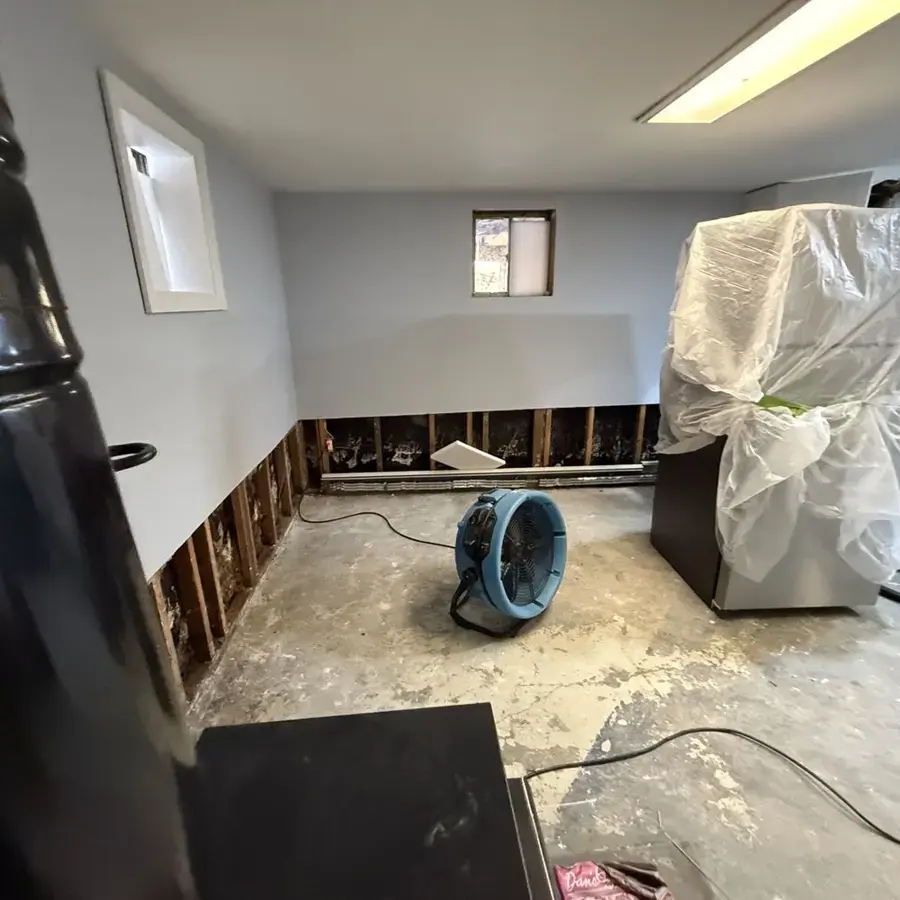
- Standing water is extracted from the slab and any finished lower level.
- Wet carpet, pad and the lower part of drywall are removed when they cannot be dried.
- Air movers and dehumidifiers dry the framing and the slab, with moisture readings to confirm.
- Mold can start within 24 to 48 hours, so drying starts right away, even before the power is fully back.
After a long outage, check these too
A power failure can leave more than a wet floor. Freezers thaw, a sump alarm goes silent and a boiler or water heater sits in damp air.
When the electricity returns, do not rush back into a wet lower level. Check the panel for water first, and let the drying team confirm that the space is safe.
What a sump overflow looks like in a lower level
When a pit overflows, water spreads across the slab and works its way under walls and into carpet. In a split level or high ranch, a finished lower level takes the hit.
The first signs are a rising puddle near the pit, a wet smell and damp paneling. Left alone, drywall wicks water upward and flooring starts to lift.
- Water that spreads from the pit toward the center of the room.
- Baseboards that turn dark and soft at the bottom.
- Furniture legs standing in water in a finished lower level.
- A musty smell that gets stronger as the water sits.
Getting ready before the next storm
A battery backup pump gives the pit a second source of power. Testing the pump by pouring water into the pit shows whether the float switch works.
Checking the discharge pipe and keeping it clear of debris helps, and so does knowing where the main water valve and the electric panel are. A short plan beats a scramble in the dark.
Raising stored items off the floor is the cheapest protection of all. A shelf one foot high keeps a small overflow from ruining a box of papers or holiday decorations.
The storm flood cleanup page and the Huntington Station service area page show what response looks like around the hamlet.