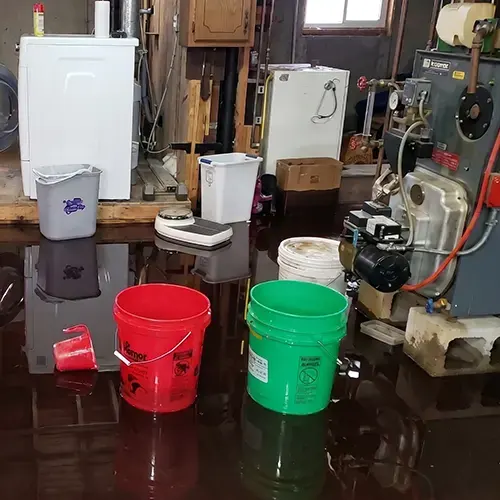
Many Huntington Station homes still heat with an oil fired boiler in the basement, feeding hydronic baseboard pipes that run along the outside walls. When a boiler fitting or a baseboard pipe starts to leak, the water rarely announces itself with a gush.
Key takeaways
- Heating leaks often start as a slow drip, so a damp floor near the boiler or a wet baseboard cover is worth checking at once.
- Hydronic systems circulate hot water through sealed pipes, so a leak keeps refilling from the system until the boiler is shut down.
- Boilers and water heaters at the end of their service life are a common source in post war Huntington Station homes.
- Water that runs along an outside wall can reach framing, insulation and the floor below before anyone sees a stain.
- Shutting down the boiler and the feed valve comes before cleanup, and drying comes right after extraction.
How a heating system leaks
A hydronic heating system is a closed loop. The boiler heats water, a pump pushes it through copper pipes and baseboard fins, and the cooled water returns to the boiler.
Because the loop is sealed, a leak does not run out and stop. The system keeps feeding in water to hold pressure, so a small leak can run for days.
- A weeping valve or fitting near the boiler leaves rust stains and a damp patch on the floor.
- A pinhole in a copper pipe behind a baseboard cover can soak the wall cavity.
- A failing expansion tank or relief valve may drip steadily when the system is hot.
- A boiler that needs frequent refilling is losing water somewhere.
Why older Huntington Station homes are exposed
Housing in the hamlet is mostly post war. Capes, ranches, split levels and colonials from the 1950s and 1960s are common, and most have a basement or a below grade lower level that holds the heating equipment.
Oil fired boilers and water heaters in those basements are often at the end of their service life. Fittings corrode, seals harden, and a small failure turns into a floor covered in water.
Baseboard pipes run along exterior walls and across the front of capes and over garages, which are the coldest spots in the house. Those same runs can fail from corrosion or from a freeze during a cold snap or a heating outage.
Cape style homes and the exterior wall problem
In a cape, baseboard pipes run along knee walls, front walls and over garage ceilings. Those runs sit beside cold air and cold framing, and a leak there stays hidden.
Water from a pipe in an exterior wall travels down inside the wall cavity to the floor below. By the time a stain shows on a ceiling or a baseboard, the framing may already be soaked.
That is why the restoration team uses moisture mapping instead of guessing, then opens only what the readings point to.
What to do when a boiler leaks
Shut it down safely
Turn the boiler off at its switch and close the water feed valve to the system. Do not touch the unit if water is touching the burner area or any electrical component.
If the leak is near the panel or outlets, leave the power alone and stay out of the water until the circuit can be shut off safely.
Limit the spread
Move stored items off the floor and pull furniture away from wet walls. Mop up small amounts and run a fan toward an open window if the weather allows.
- Note any oil smell or sheen on the water, since oil changes how the cleanup is handled.
- Photograph the boiler, the pipe and the wet area before cleanup begins.
- Keep wet rugs and boxes out of the room so they stop wicking.
Spotting a leak before the floor is wet
Most heating leaks give small hints before they become a flood. Catching one early often means the difference between wiping a floor and opening a wall.
A boiler that short cycles, a gauge that keeps dropping or a basement that smells damp can all point to a slow loss of water.
- Rust streaks below a valve or a pipe elbow.
- Baseboard covers that are stained, swollen or warm to the touch in one spot only.
- A refill valve that has to be opened often to hold pressure.
- Peeling paint or buckled flooring along an outside wall.
How the restoration team handles the water
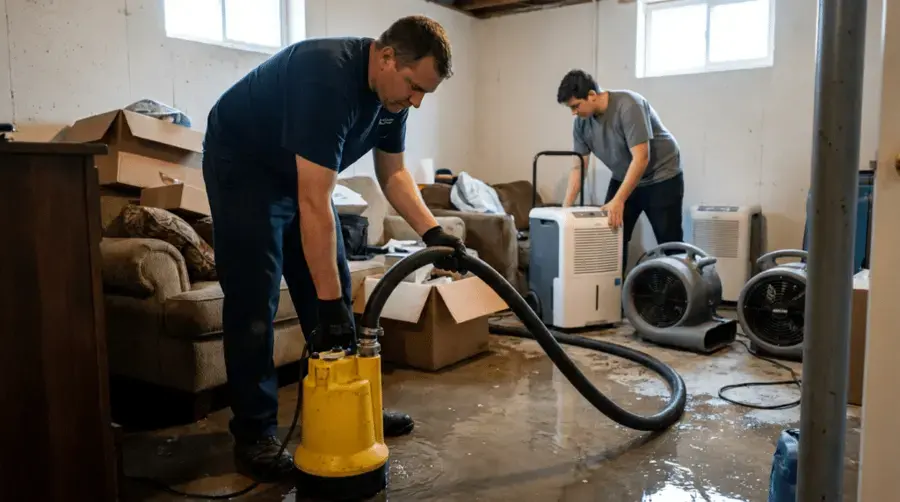
The crew starts by finding where the water went. A moisture meter and a thermal camera show wet spots inside walls and under floor coverings that are not visible.
Standing water comes out first, which is covered on the water extraction page. The dedicated boiler leak water damage page explains how heating leaks are treated.
- Wet baseboard covers, drywall and insulation are opened where moisture is trapped.
- Air movers and dehumidifiers run until readings reach the drying goal.
- The heating system stays off the job until a heating contractor has repaired it.
Frozen baseboard pipes are a close cousin
The same copper that carries hot water in the winter can split when the heat goes out. A cold snap, a power failure or an empty oil tank can leave water sitting in an outside wall run.
Once the thaw starts, a split pipe pours water into the wall. The steps for that situation are laid out on the frozen pipe cleanup page.
Mold can begin to grow within 24 to 48 hours in wet framing, so a heating leak that was found late still needs drying right away.
Costs and coverage
Cost depends on how far the water spread and how many materials have to come out. A small basement leak is far cheaper than a wall run that soaked a finished lower level.
Insurance policies treat a sudden pipe failure differently from a long running leak. The policy wording decides what is covered, so photos taken before cleanup make that conversation easier.