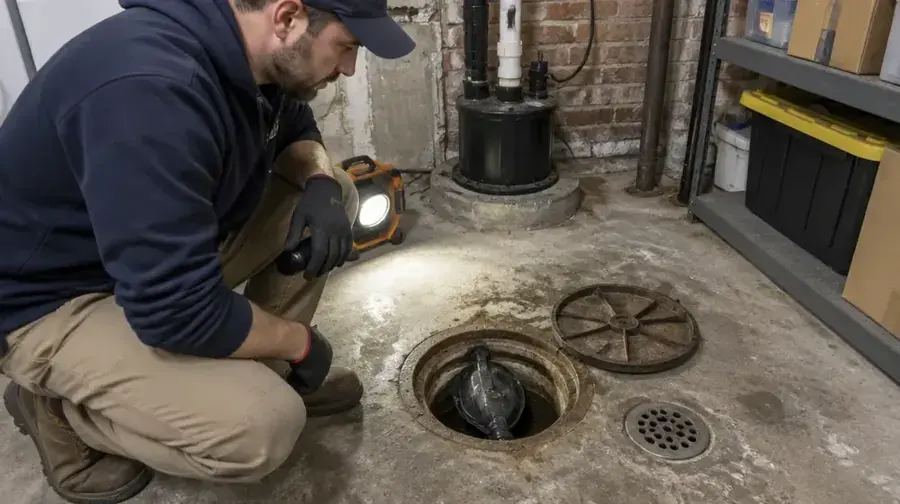
Much of Suffolk County is unsewered, and a lot of Huntington Station homes rely on a cesspool or septic system instead of a municipal sewer. When one of those systems backs up, the water that surfaces in a floor drain, laundry sink or basement bathroom is not ordinary water.
Key takeaways
- A cesspool or septic backup is contaminated water, so it is handled differently from a supply pipe leak.
- Stop using sinks, showers, toilets and the washing machine as soon as water rises, because every use adds to the backup.
- Keep children, pets and bare hands out of the affected area until the water is gone.
- Porous materials such as carpet, pad and wet drywall usually cannot be saved after contact with sewage.
- Cleanup, drying and photos for the insurance claim all happen in a set order, and the order matters.
Why a cesspool backup is different
A burst supply pipe sends clean water into a house. A cesspool backup sends wastewater, and that water can carry bacteria and other contaminants into whatever it touches.
That is why restoration pros call it category 3 water. The label has nothing to do with how much water there is. It describes how risky the water is.
- Clean water from a supply pipe can often be dried in place.
- Water from a cesspool or septic tank has to be removed, and many of the materials it touched have to be removed too.
- A small amount of backup can still contaminate a large area once it wicks into carpet and the bottom of walls.
Why Huntington Station homes see these backups
Most homes in the hamlet are post war capes, ranches, split levels, high ranches and colonials from the 1950s and 1960s. Many have a full or partial basement or a below grade lower level.
That matters because a backup always finds the lowest opening. In a house with a basement bath, a laundry drain or a floor drain, that lowest point is usually the lower level.
Heavy rain is a common trigger. Saturated ground slows how fast a cesspool can drain, and an older system that is already near its limit can overflow into the house.
After a nor'easter or a tropical storm, the same system may be dealing with high water around it and a long power outage inside the house.
Tropical Storm Isaias in August 2020 and Superstorm Sandy in October 2012 both left Long Island homes dealing with outages and wet ground.
When the backup follows heavy rain
A backup that arrives with a downpour often has two water sources at once. Rain and groundwater press in from outside while the cesspool refuses to drain.
The water in the lower level may be a mix of both, and it should all be treated as contaminated. The hillside runoff that collects against foundations on the North Shore ground can add to the load.
The restoration team will map where the water went, because the visible puddle usually understates how far it spread under flooring and inside wall cavities.
The first steps to take
Stop adding water
Every flush, shower and load of laundry sends more water to a system that is already full. Hold off on all of it until a septic contractor has looked at the system.
If anything is overflowing right now, closing the house water supply at the main valve can slow things down.
Protect people first
Keep everyone out of the wet area, especially children and pets. Anyone who has to walk through it should wear waterproof boots and gloves and wash well afterward.
- Do not run a household vacuum or a fan across a sewage soaked floor, because that spreads contamination through the air.
- Do not try to rinse sewage into a floor drain, because the drain may be the source of the backup.
- Turn off power to the area if water is near outlets, a panel or a basement heating unit, and only if it is safe to reach the switch.
What the restoration team does
Sewage cleanup follows a sequence. The crew extracts the water first, then removes what cannot be cleaned, then cleans and treats the surfaces that stay.
Details of the job are covered on the sewage cleanup service page, and the extraction step is described on the water extraction page.
- Extraction pulls standing wastewater out of the lower level with a truck mounted or portable unit.
- Carpet, pad and soaked drywall are cut out and bagged, because porous materials hold contamination.
- Hard surfaces and framing are cleaned and treated with an antimicrobial product.
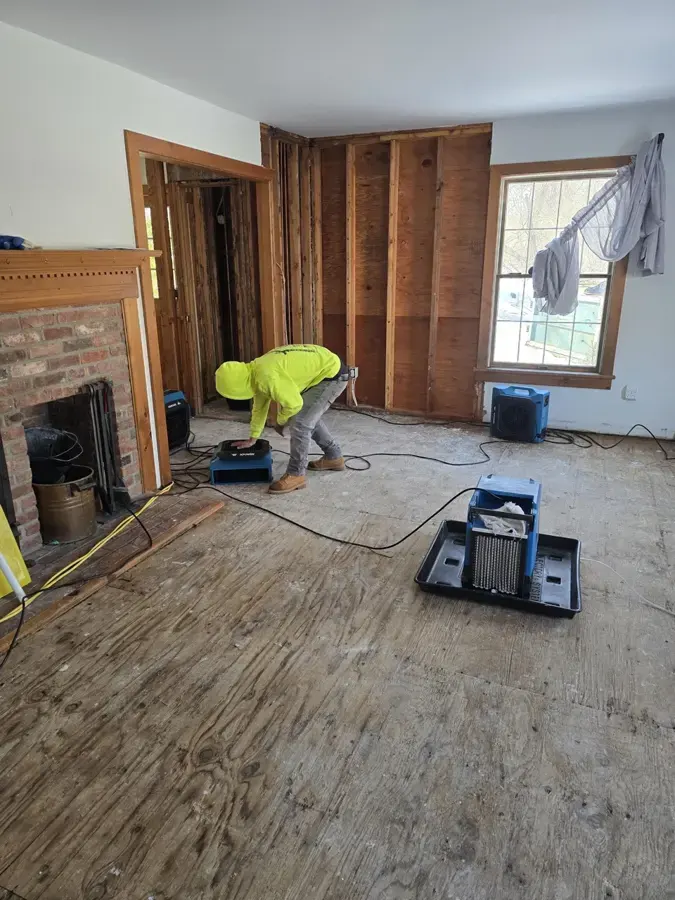
- Air movers and dehumidifiers dry the space to the IICRC S500 goal, and moisture readings confirm the result.
What not to do during a backup
The urge to fix it fast leads to the most common mistakes. A few of them make the cleanup harder and more expensive.
Chemical drain cleaners can damage an already stressed system and are a hazard for anyone who has to work in the water afterward.
- Do not pump the water into the yard or a street drain, because that spreads contamination.
- Do not mix bleach with other cleaners, since the fumes are dangerous in a closed basement.
- Do not keep a wet carpet in place hoping it will dry, because it will not dry clean.
- Do not move wet boxes through the rest of the house, because that carries contamination upstairs.
Drying matters even after the sewage is gone
Once the contaminated materials are out, the structure is still wet. Wood framing, the slab and the bottom of the walls hold moisture for days.
Mold can begin to grow within 24 to 48 hours in damp materials, which is the reason drying starts right after the cleanup. A lower level that stays damp invites a second problem after the first one is solved.
A basement that also took on rain or hillside runoff may need the steps described on the basement flooding cleanup page.
Documenting for insurance
Take photos and video of the water, the affected items and the drain or fixture where it surfaced before anything is moved. Keep a list of what was damaged.
Policies treat sewer and drain backup differently from other water losses, and some need a separate endorsement. Reading the policy or asking the insurer is the only way to know what applies.
A rough idea of the budget helps while that conversation is happening, and the water damage cost calculator gives a range based on the size of the area.