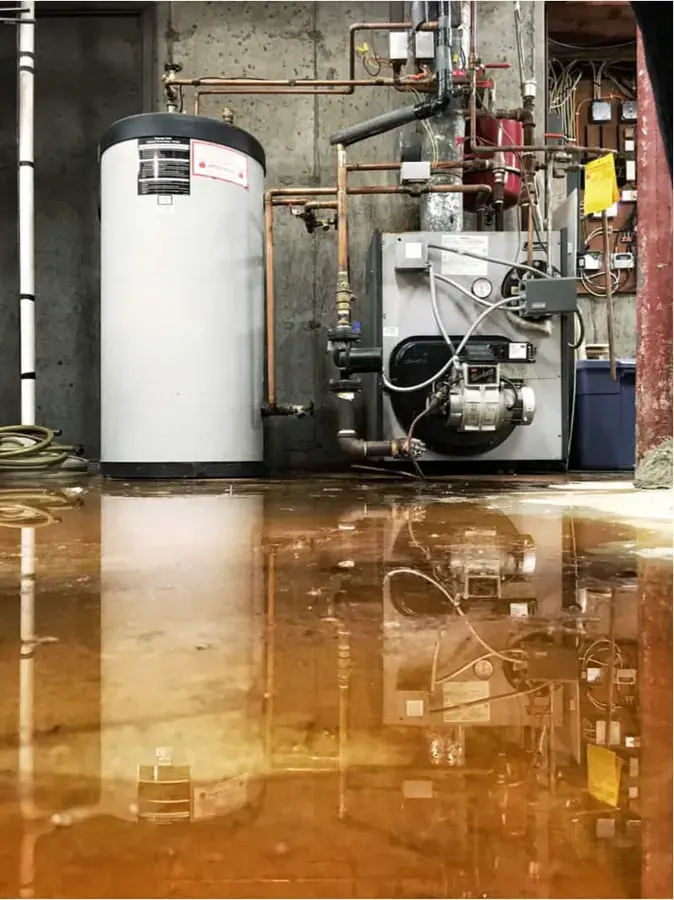
In Bayville, the water that threatens a basement does not come from a pipe. It comes from Long Island Sound, Mill Neck Bay and Mill Neck Creek, and when surge arrives the first things it reaches are the water heater, the furnace and the electric panel.
Key takeaways
- About half of the homes in Bayville are in the flood hazard area, according to the village's 2021 flood notice.
- The village flood notice recommends raising water heaters, furnaces, electrical panels and outlets above flood elevations.
- After Hurricane Sandy on October 29, 2012, a Bayville Avenue homeowner reported that water filled her basement up to the ceiling.
- A water heater that sat in floodwater needs to be inspected before it is turned back on.
- Extraction, drying and equipment checks follow in that order, and mold can begin within 24 to 48 hours.
Where the floodwater in Bayville comes from
Bayville sits on the Bayville and Centre Island Peninsula, reachable only by the Bayville Bridge and a narrow spit of land connecting to Lattingtown and Locust Valley.
Floodwaters come from Mill Neck Creek, Mill Neck Bay and Long Island Sound. Bayville Avenue floods in heavy rain and tidal flooding, and the Army Corps of Engineers has documented seawalls overtopped and destroyed in Hurricane Sandy.
- The Hurricane of 1938 flooded the lower part of Bayville with approximately 6 feet of water.
- During Hurricane Sandy on October 29, 2012, the presidential streets and numbered streets flooded severely, and low lying areas got a mandatory evacuation.
- After Sandy, homeowners were without power for about five days, and West Shore Road stayed closed after part of it collapsed.
A look at past storms
The village names several storms that cost residents millions of dollars in damage: the Halloween Storm of 1991, the nor'easters of 1992 and 1996, Hurricane Irene and Superstorm Sandy.
Sandy's flooding in the low streets was much more severe than Irene's. That is a useful reminder that the next storm may be worse than the last one.
- Low lying streets flood first, but the water can climb into higher basements if a surge stalls.
- Bayville Avenue floods in heavy rain and in tidal flooding, so it is not only a hurricane problem.
- Marinas and waterfront properties sit on the same low ground, so the boating season brings its own exposure.
Why the water heater is the first casualty
In most homes the water heater, boiler or furnace sits in a basement or on a low floor. That is the part of the house that surge reaches first.
Once floodwater covers the burner, the controls and the electrical connections, the unit may be ruined. Many homes were built around 1966, the median year for the village, so the equipment in them is often older too.
The village runs its own Water Department, which publishes drinking water reports, but the supply is not the concern in a surge. The concern is the water that arrives from outside, and where it settles.
- About 1,925 homes heat with utility gas and about 468 with fuel oil, so both gas and oil equipment is at risk.
- A tank that sat in water can leak or corrode afterward.
- Panels and outlets in the same basement can short out.
What raising the equipment means
The village flood notice recommends raising water heaters, furnaces, electrical panels and outlets above flood elevations. It also recommends installing backflow devices on water pipes and septic systems.
The Building Department can give a property's flood zone, base flood elevation and repetitive loss areas. The village requires a permit for all development and alterations, and substantial improvements in a floodplain must include flood protection measures.
A homeowner planning to raise a unit should ask the Building Department which permit applies before any work starts.
After the water reaches the heater
Shut off and stay out
Stay out of a flooded basement while power or gas is connected. Floodwater and electricity together is a serious hazard.
- Shut off power to the basement at the panel only if the panel is dry and reachable.
- Close the gas supply to the unit if it is safe to reach the valve.
- Do not relight a pilot or restart a unit that sat in water.
Clean up and dry
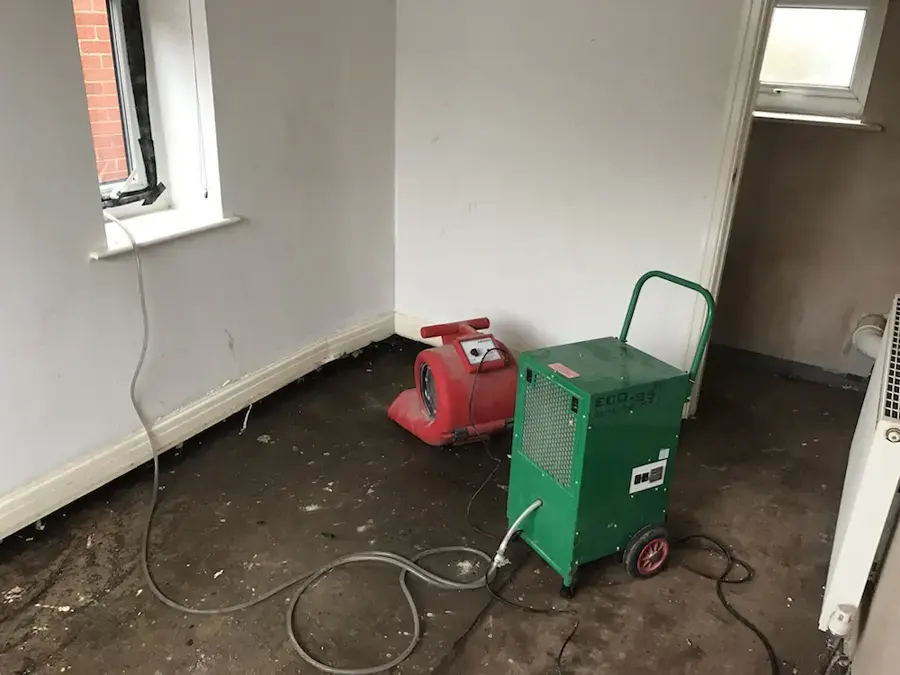
The crew pulls the water out of the lower level first. The Bayville water extraction page and the Bayville storm flood cleanup page describe how that works for coastal floods.
Surge water is not clean. It carries salt, sand and contamination, so soaked insulation and porous materials are usually removed.
Septic and drywell systems add a wrinkle
Bayville is an unsewered community, and homes rely on private septic tanks and cesspools and on drywells for stormwater. High water around the house can flood those systems too.
If the water in the basement smells of sewage, treat it as contaminated and keep everyone out. The water heater failure page covers the equipment side, and the Bayville town page lists the full range of local services.
Getting ready before the next surge
A few steps taken in a calm week make a flooded basement much easier to deal with. They are simple, and they cost little.
Start with the equipment and the paperwork. A raised water heater helps, and so does a record of what is in the basement.
- Photograph the water heater, boiler, panel and basement contents in normal condition.
- Move valuables and papers above the likely waterline.
- Learn where the shutoffs for power, gas and water are.
- Ask the Building Department for the property's flood zone and base flood elevation.
Insurance and paperwork
Flood damage is usually covered by a separate flood policy, and the National Flood Insurance Program is one source. A standard homeowner policy may not cover surge water, so the policy wording matters.
Photos of the waterline, the heater and the damaged items taken before cleanup support the claim.
Keep the receipts for emergency work such as pumping, since an adjuster will ask for them. A dated list of damaged equipment, with brand names and ages if known, speeds up the claim.